
Food packaging: types, benefits and industry examples
Food packaging is a key part of the food industry. It helps preserve products for longer, protects safety and quality, facilitates transport and provides essential information to consumers. Today, materials and technologies can be adapted to the needs of each food and to regulatory and sustainability requirements.
What is food packaging and why is it important?
Food packaging includes the materials and processes used to protect food from production to final consumption. Its main purpose is to create a barrier against oxygen, moisture, light, microorganisms and physical damage.
- Maintains product quality and properties.
- Extends shelf life and supports preservation.
- Enables safe and efficient distribution.
- Provides information on ingredients, dates and traceability.
Benefits of food packaging
For manufacturers, suitable packaging reduces waste, optimises storage and transport, and adapts products to different sales channels. For consumers, it delivers safer food, greater convenience, clear information and better preservation at home.
Types of food packaging by material
Plastic food packaging
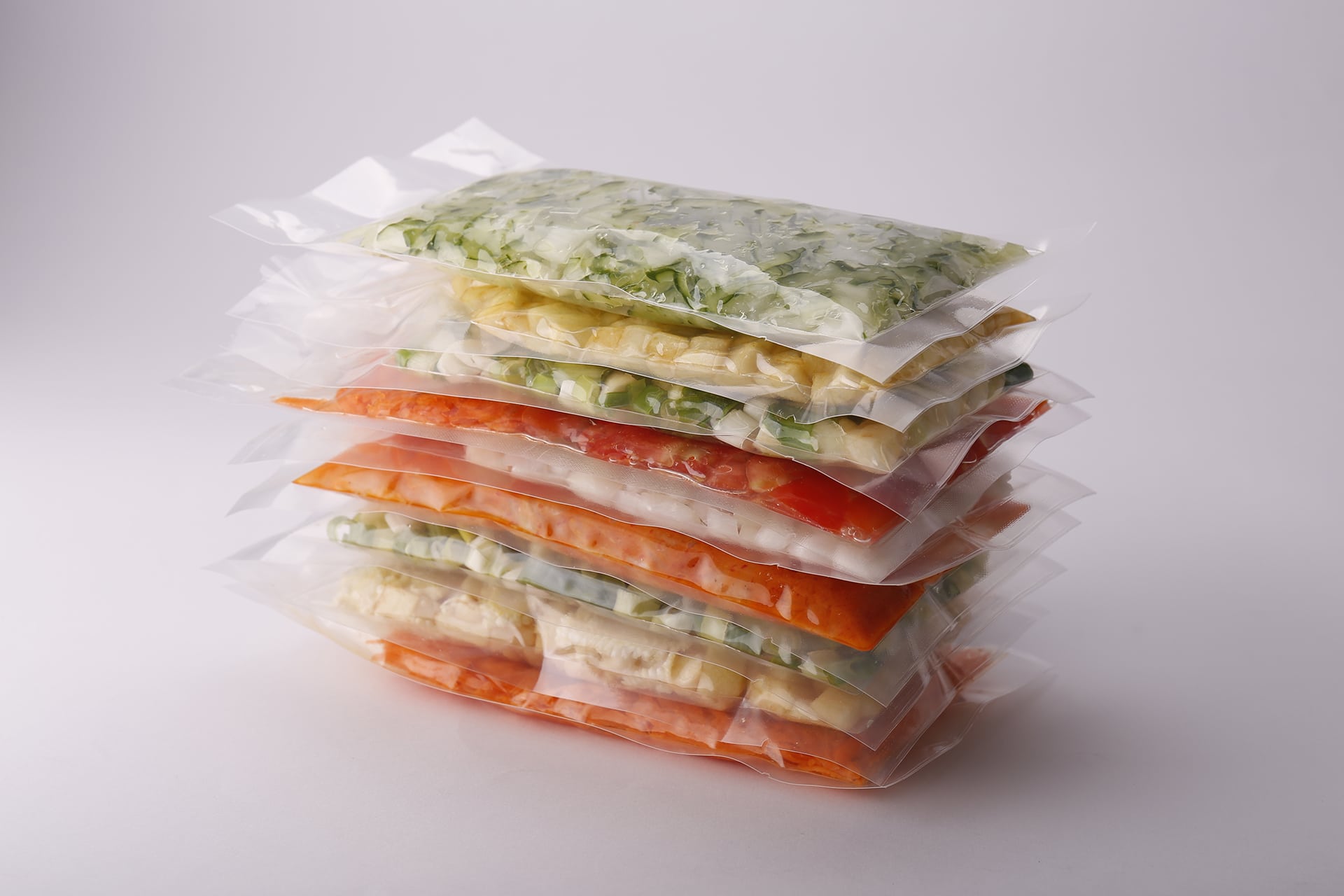
Plastic packaging is widely used because it is versatile, lightweight and resistant. Different structures can provide barriers against moisture and oxygen, withstand handling and work with vacuum or modified-atmosphere systems. Flexible, semi-rigid and rigid solutions are available for fresh, processed, frozen and ready-to-eat foods.
Compostable food packaging
Compostable solutions are made with materials designed to break down under controlled composting conditions. They can be suitable for short-life products or applications with lower barrier requirements. Their suitability must always be assessed according to the product, required shelf life and local waste-management system.
Other food packaging materials
Glass, metal, paper and cardboard are also used in the food sector. Each material offers a different balance of protection, weight, processability, presentation and end-of-life options. The right choice depends on the product and its complete distribution chain.
Examples of packaged foods
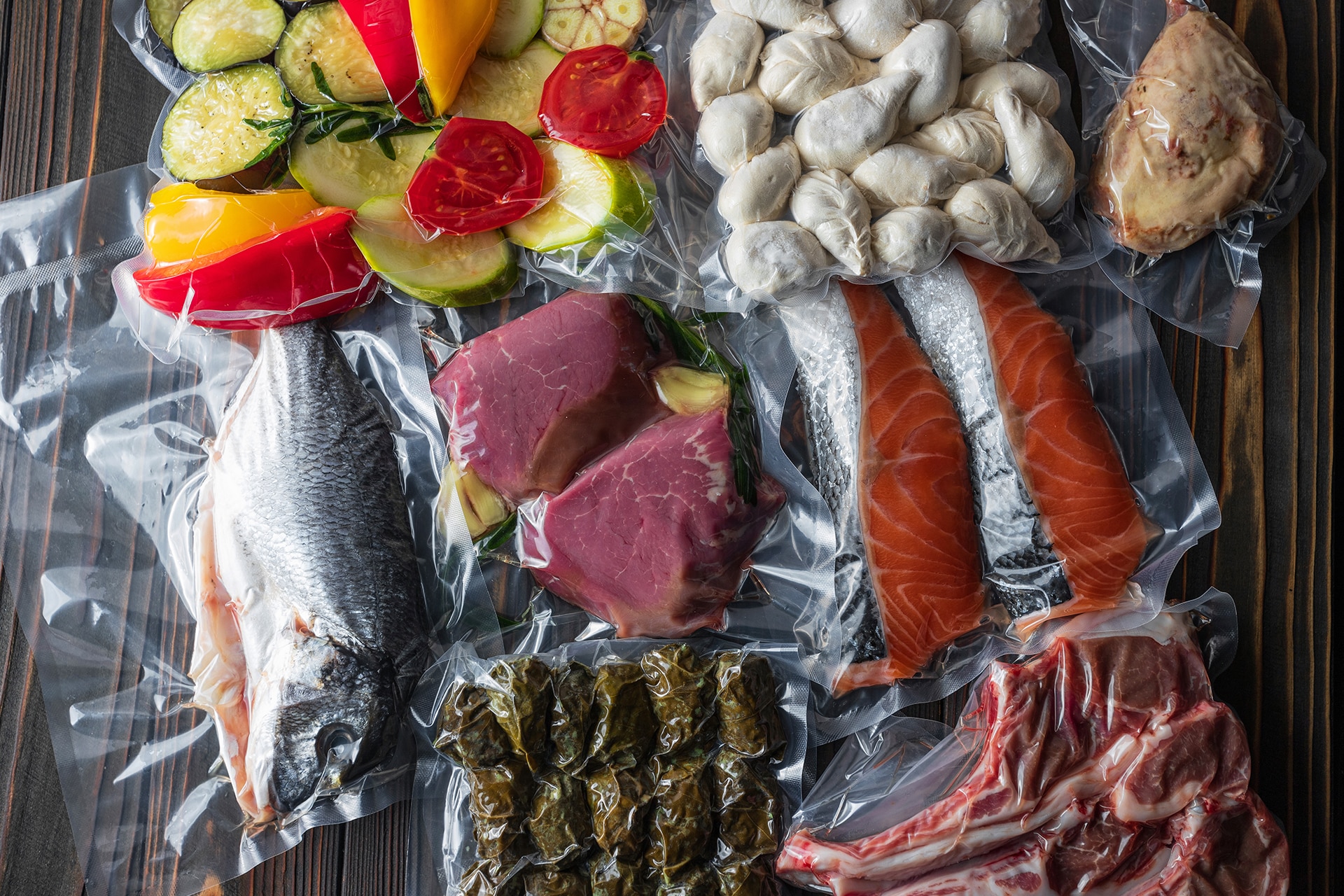
- Fresh meat, fish, cheese and sliced products.
- Frozen foods, vegetables and ready meals.
- Coffee, nuts, snacks, cereals and powdered products.
- Sauces, purées, soups, liquids and semi-liquid products.
- Pet food and nutritional supplements.
Vacuum packaging for food
Vacuum packaging removes most of the air from inside the pack before sealing it. Reducing oxygen slows oxidation and the growth of aerobic microorganisms. The packaging material and seal must be selected for the product, the process and the expected storage conditions.
Shelf life of vacuum-packed foods
Vacuum packing can extend shelf life, but it does not replace refrigeration, hygiene or correct temperature control. The result depends on the food, preparation, barrier structure, sealing quality and cold chain. Industrial shelf-life claims should always be supported by appropriate testing.
Food packaging trends
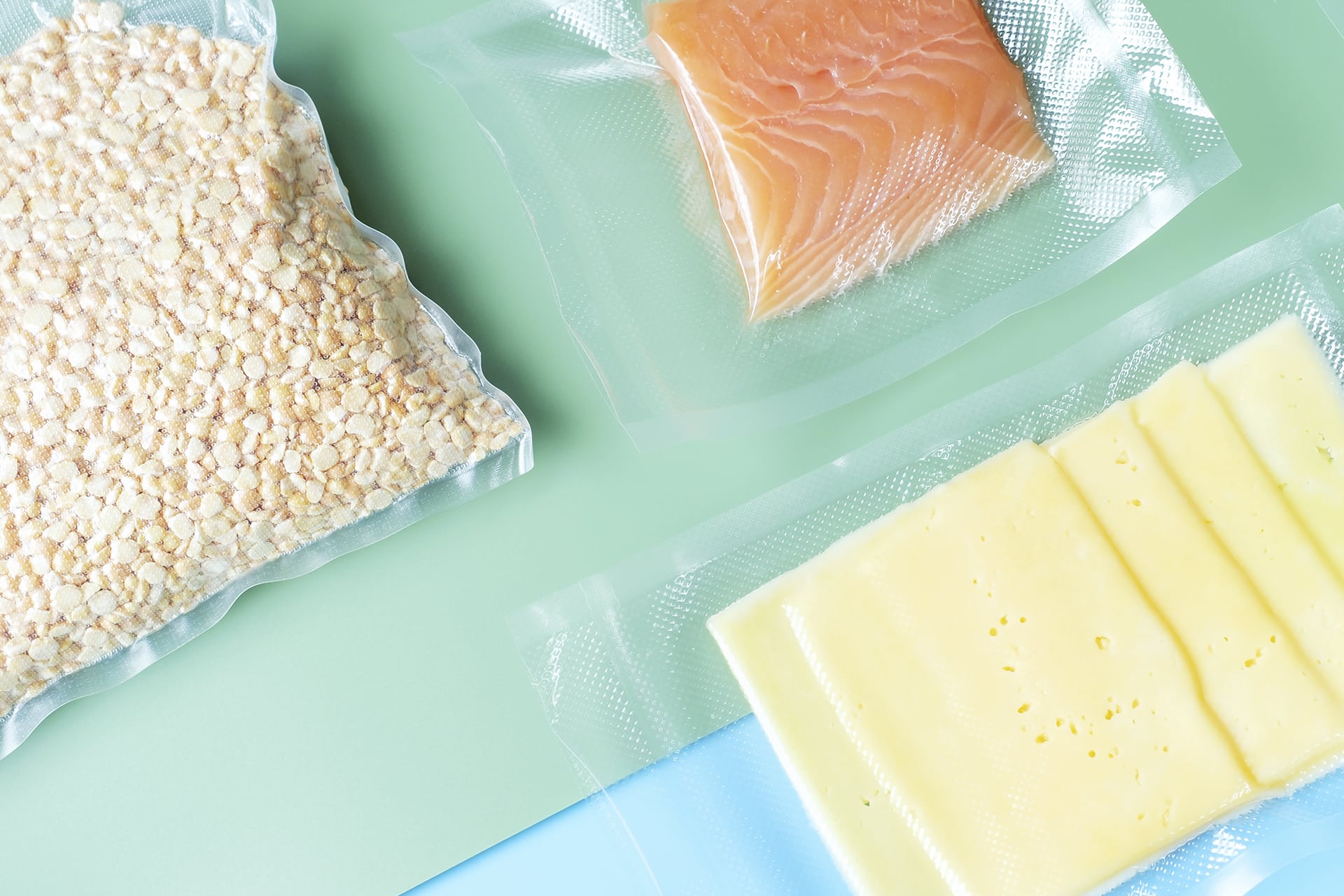
The sector is moving towards recyclable mono-material structures, material reduction, improved barriers, smarter formats and more efficient logistics. Clear environmental claims and packaging designed for the actual collection and recycling system are increasingly important.
More efficient and sustainable food packaging
At Plásticos Arias, we develop food packaging solutions according to the product, process and distribution requirements. Our team helps industrial customers define the format, material, barrier properties, printing and finish required to protect food and present it effectively.
Related reading: Flexible packaging: what it is, types and examples and What Is Active Packaging? Functions, Benefits, and Applications in Food.
We customize your orders according to your needs.
Request a no-obligation quote for any of our products.
 REQUEST A QUOTE